
What Another Storm Season Without a Plan Actually Costs You
Skip this and the bill doesn't show up as a line item on a receipt — it shows up as a torn-off door, a buckled track, water pooled across a garage floor, or worse, a roof that lifted because wind got inside the house through the one opening built to swing open on command. Hurricane remnants still push through this part of South Carolina well into fall, and the thunderstorms that roll off the Pee Dee and across Conway, Carolina Forest, and the coast can carry straight-line gusts just as damaging as a named storm. A garage door that fails during one of those events doesn't just need a repair afterward. It can take drywall, insulation, stored tools, a vehicle, and in some cases structural framing with it.
Why the Garage Door Fails Before Anything Else
Every other wall in a home is a fixed, braced structure. The garage door is not. It's a large panel held in place by rollers riding in a track, tensioned by springs, and driven by an opener that was never designed to resist sustained wind load. When wind pressure builds against a standard residential door, the door can bow, the rollers can pop out of the track, or the whole panel can cave inward.
Once that happens, the garage stops being a sealed space. Wind rushes in and pushes upward against the roof decking from underneath — a different kind of pressure than roofs are built to resist from above. This is the scenario insurers and builders mean when they call the garage door the weakest point in a home's wind envelope. It's not an exaggeration specific to one brand of door; it's basic physics of surface area versus the hardware holding it in place.
Signs Your Door Won't Hold Up This Season
- Visible daylight or gaps between the door and the track or frame, which means wind can get a grip on the edge.
- Rollers that look worn, cracked, or pitted — common on older doors exposed to the humidity and moisture that sit around garages near pine cover and shaded lots.
- A track that's bent, loose, or pulling away from the frame at any point.
- A lightweight, older steel or aluminum door with no internal bracing, common on homes built before wind-rated doors became standard.
- Rust at the bottom panel or hinges, a sign that heavy rain and humidity have already been working on the hardware.
What Actually Holds Up in High Wind
A few upgrades make a real difference when wind pressure hits, and they're worth weighing against the inconvenience of doing nothing:
- Horizontal bracing kits retrofitted to an existing door add rigidity without replacing the whole unit — a lower-cost option, though they won't bring an old door up to full wind-rated performance.
- Reinforced tracks and heavier gauge rollers reduce the chance of the door popping loose from its guide during gusts.
- Wind-rated replacement doors are built with internal struts and heavier panel construction designed specifically to resist wind pressure — a bigger investment, typically landing in the higher end of national garage door price ranges, but the strongest long-term fix.
- A securely mounted opener with a working manual lock so the door can be locked down independently of the motor if power drops during a storm, which happens often with coastal outages.
What to Check Yourself This Week
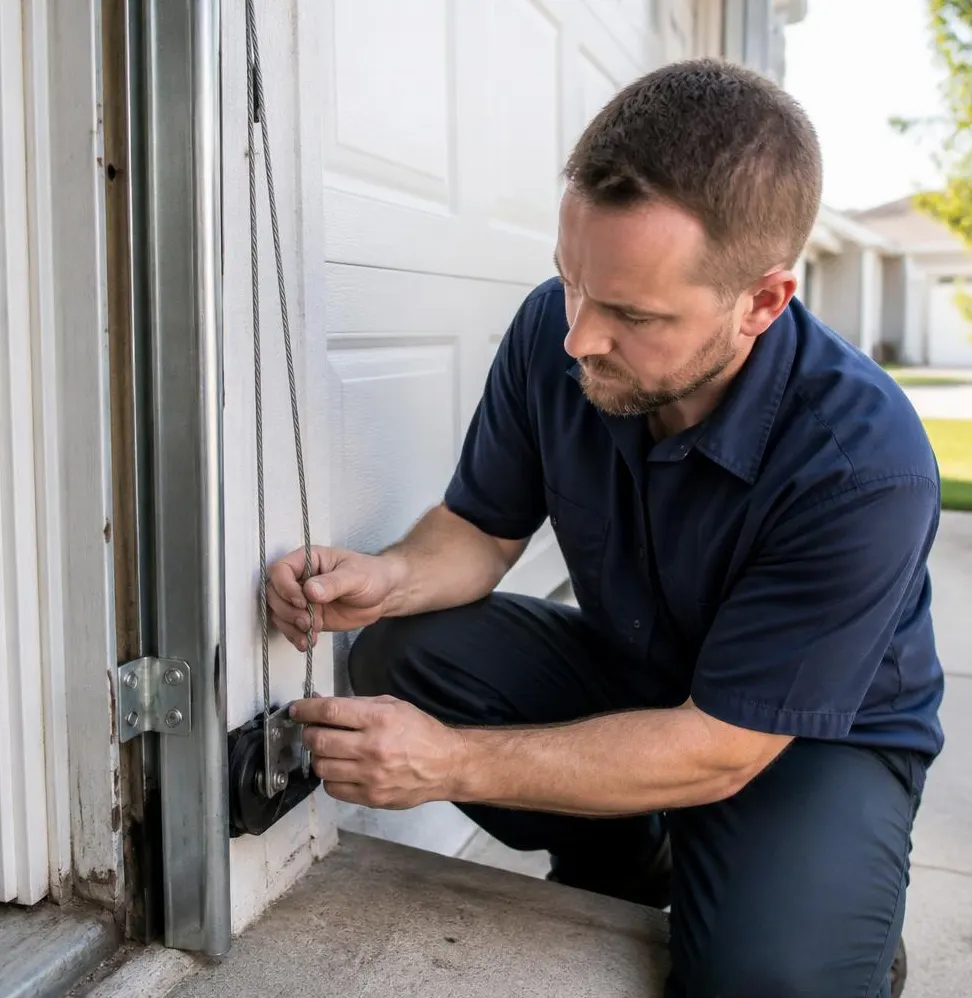
- Inspect rollers and tracks for wear, rust, or gaps and tighten any loose bolts on the track brackets.
- Lubricate hinges and rollers — humidity and salt air speed up corrosion faster here than in drier climates.
- Check weatherstripping along the bottom and sides; heavy rain finds every gap and pools against foundations if it's worn through.
- Clear gutters and drainage paths near the garage so runoff doesn't pond against the slab during a heavy system.
- Trim overhanging pine branches near the structure — falling limbs during high wind are a direct threat to door panels and tracks.
When to Call Myrtle Beach Garage Door Works
If your door shows rust, gaps, worn rollers, or you're simply not sure it would hold up through a serious wind event, that's the point to call rather than wait. Myrtle Beach Garage Door Works can run a full inspection as part of our Garage Door Maintenance service, catching track and hardware issues before they become storm-day failures, and if your door is past the point of reinforcing, our Garage Door Installation team can walk you through wind-rated options sized for your garage and budget. We also handle Spring Replacement when aging springs are adding extra strain to a door that's already working harder than it should.
Storm season along the Grand Strand doesn't wait for a convenient time. If you're in Myrtle Beach, North Myrtle Beach, Surfside Beach, Conway, Murrells Inlet, Garden City, Little River, or Carolina Forest, call Myrtle Beach Garage Door Works today and get your door checked before the next system is on the radar.